
Why Now is The Time to Lock in Your 2026-2028 Experiential Strategy
From 2026 to 2028, the live experience calendar is going to be packed:
FIFA. The Olympics. Multiple Super Bowls. F1 races. Global cultural festivals. Brand tours. Tech conferences. Creator summits.
For brands, this isn’t just “a busy few years.” It’s a once-in-a-generation window where presence, positioning, and experience quality will separate the brands that feel unavoidable from the ones that barely register.
The mistake? Waiting until 2026 to start thinking about it.
If you want access to the best fabrication teams, venues, AV partners, and experiential event production agencies—and you want to do it without blowing up your budget—your strategy needs to be in motion now, not later.
The Hidden Supply Crisis: Why Waiting Shrinks Your Options
Behind every memorable experience is a network of people, resources, and approvals that are already under pressure.
Fabrication Teams Are Maxed Out
The builders and scenic teams capable of executing immersive environments, modular builds, and high-touch details are not sitting around waiting for last-minute briefs. They’re planning years out—especially around major cultural moments like FIFA and the Olympics.
If you wait until 2026 to confirm, you’re either:
Competing for their last open windows
Paying rush premiums
Or settling for teams who aren’t equipped for the level of experience you’re imagining
Venues Aren’t “Just Available” Anymore
Prime venues in cities like LA, New York, Miami, Chicago, London, Paris, Singapore, and beyond are already fielding long lead inquiries. The best spaces for hospitality, fan activations, and brand takeovers will be claimed by the brands who are working their 2026–2028 plans now.
Wait too long and you’re dealing with:
Second-choice locations
Suboptimal layouts for your concept
Compromises on dates, capacity, or neighborhood fit
Permits & Regulations Move at Their Own Speed
Layer in city approvals, special event permits, street closures, signage regulations, and licensing—and timelines stretch even further. Now add in global attention and security requirements around FIFA, the Olympics, and other mega-events. Nothing about that moves fast.
Specialty Labor & Tech Partners Are Finite
AV and lighting teams who can handle complex, multi-day builds. Interactive and immersive tech partners. Fabricators who understand sports, luxury, or hospitality environments. These are specialized skill sets—and they’re not infinitely available.
All of this is why so many brands wind up facing “surprise” costs late in the game: overtime, rush fees, additional scenic fixes, extended labor, last-minute shipping, or redesigns when reality doesn’t match early assumptions.
If you want to see exactly where those financial landmines usually show up, The 10 Hidden Costs of Event Production (and How to Avoid Them) is a resource worth putting in front of your whole internal team now—before you lock in your 2026–2028 plans. It forces you to see the supply-side constraints and budget risks that most teams only discover when it’s too late to adjust.
Inflation-Proofing Your Budget: Why Early Contracting Matters
Locking in early isn’t just about access. It’s one of the most effective ways to protect your budget from volatility.
Materials & Décor
Scenic builds, staging, signage, custom furniture, fabrication, decor—all of it relies on materials like wood, metals, fabrics, and composites. These prices fluctuate based on global supply chains, seasonal demand, and scarcity.
Early bids and contracts help:
Anchor your cost baselines
Avoid sharp spikes in material pricing
Give you time to make smart substitutions instead of last-minute compromises
Labor & Crew Rates
AV technicians, production crew, fabricators, brand ambassadors, security—all adjust rates annually. In high-demand windows, they also add surcharges for peak timing, overtime, or late bookings.
If your planning is late, you’re not just paying more—you’re paying more with less leverage.
Transportation & Logistics
Moving scenic elements, props, inventory, tech, and staff isn’t just a truck line item. It’s fuel costs, route selection, loading windows, storage, and drayage—made more complex when global events pressure local infrastructure.
The earlier you plan:
The more routing options you have
The more flexible your delivery windows are
The less likely you are to pay premiums for last-minute shipping or restricted access slots
CSA often starts with questions like:
Are you planning to reuse scenic pieces across events or regions?
Where will assets live once the event is over?
Who is responsible for storage, maintenance, and redeployment?
When these aren’t answered until the end, you see the exact kind of “unexpected” costs that quietly add five or six figures to a campaign. That’s why aligning your financial planning with a tool like The 10 Hidden Costs of Event Production (and How to Avoid Them) is so valuable—it gives brand and finance teams a shared language for identifying risks before contracts are signed.
The Experience Arms Race: What Leading Brands Are Already Building Toward
While some brands are still thinking in terms of “an event,” the leaders are architecting experience ecosystems for 2026–2028.
You’re going to see:
Hyper-immersive, tech-enabled environments
Mixed reality, sensor-driven installations, responsive light and sound, AI-personalized interactions.Values-integrated builds
Scenic and staging that reflect sustainability, local culture, and brand ethics—not just aesthetics.Series-based experiences
Instead of one big launch, brands will roll out multi-city series, micro-events, tours, and pop-ups that ladder up to a larger narrative.
Think about:
Brands like Nike, who build houses and hubs that blend sport, community, and culture.
Glossier, whose pop-ups feel like living pieces of their brand world.
Platforms like Canva, taking their community tours into markets that deepen loyalty off-screen.
By the time 2026 hits, the brands that planned ahead will have:
Locked in the partners who can actually execute at this level
Iterated on their concepts in smaller markets
Built internal buy-in and playbooks
The brands who wait will be trying to “match that energy” with rushed timelines, limited options, and recycled ideas.
Venue Alignment Over Venue Availability
In a high-demand window, your question can’t just be: What’s open?
It has to be: What actually supports the story we’re telling and the experience we need to deliver?
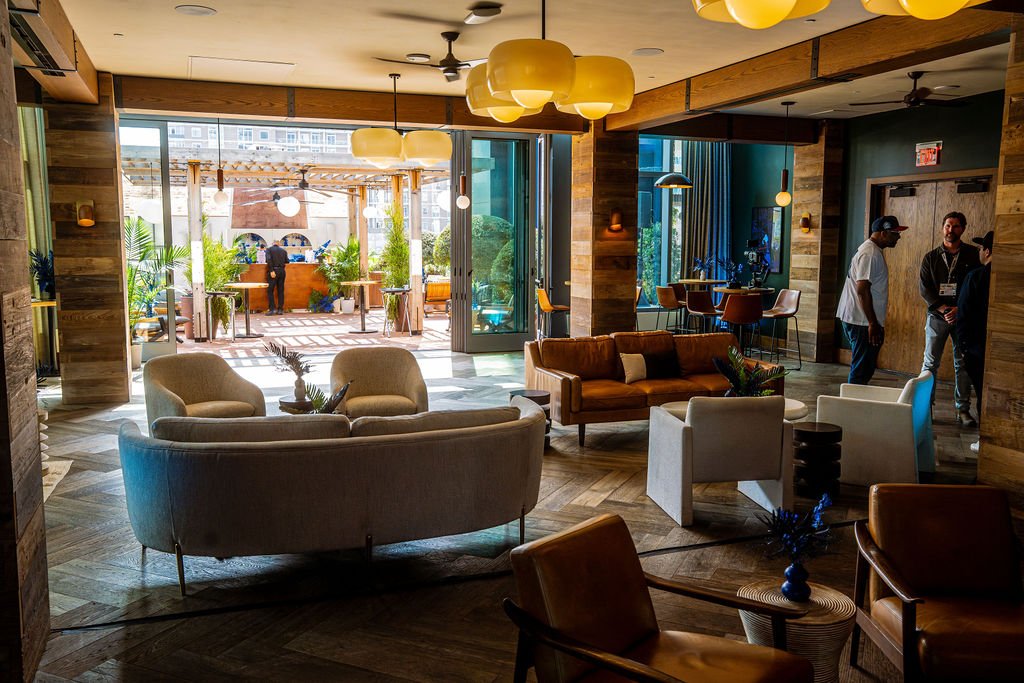
When CSA evaluates venues for 2026–2028, we’re looking at:
Capacity
Integrated AV infrastructure (not just “plug in a mic”)
Internet capacity for content, streaming, and interactive builds
Multi-use flexibility:
Can the venue support registration, main programming, VIP hospitality, green rooms, storage, and content capture zones?
Load-in and load-out practicality
Accessibility and guest flowHow the venue’s existing character supports (or clashes with) the brand’s positioning
The right venue becomes a force multiplier for your brand. The wrong venue forces you to spend time and money “fixing” something you were never going to fully control.
A Once-in-a-Generation Cultural Window
The 2026–2028 stack is bigger than “sports” or “events.” It’s a concentrated stretch where global attention, travel, content creation, and fandom all intensify in the same regions, at the same time.
FIFA & The Olympics: Global audiences, national pride, and multi-city cultural convergence. Activating around these moments—fan zones, neighborhood pop-ups, hospitality, watch experiences—gives brands access to emotional energy that can’t be replicated in a normal year.
Super Bowls & F1: Lifestyle, hospitality, luxury, and spectacle. These are the places where brand presence doubles as social status for attendees—and where thoughtfully designed experiences spread far beyond the people who were physically there.
These aren’t just campaigns. They’re opportunities to hardwire your brand into memories, trips, friendships, and life moments.
The real question is:
Will your brand show up with something that feels intentional, aligned, and unforgettable—
or with whatever was left when you finally decided to move?
If you’re serious about playing in the 2026–2028 experiential landscape, the planning window is now. Strategy now, relationships now, budgets now, commitments now.
And as you do that planning, make sure you’re not just dreaming bigger—but planning smarter.
The 10 Hidden Costs of Event Production (and How to Avoid Them) is one of the simplest ways to pressure-test your ideas before they ever leave the deck—and to make sure that when you do lock things in, you’re doing it with eyes wide open.