
How Brands Can Win Big During the Super Bowl, NBA All-Star, and FIFA 2026 Without Being an Official Sponsor
Every major global event has the same gravitational pull: brands want proximity, visibility, and cultural relevance — but official sponsorships come with massive price tags and restrictive playbooks. The truth is, some of the most talked-about moments during events like the Super Bowl and FIFA don’t come from official partners at all. They come from brands who understand how to activate around the moment — ethically, strategically, and with a deeper understanding of human behavior.
At Create Something Amazing, we’ve helped brands navigate high-security, high-stakes cultural environments while maximizing impact without crossing legal or brand boundaries. And what we’ve seen consistently is this: constraints don’t limit creativity — they enhance it.
When you can’t rely on official signage, sponsorship rights, or logo saturation, you have to build experiences people want to talk about. You have to create discovery. You have to create connection. You have to create meaning.
This is where non-sponsor activations become more powerful than official ones.
Ambush Marketing Done Ethically and Strategically
There’s a misconception that “ambush marketing” is synonymous with breaking rules. It’s not.
There’s a right way to do it—and it’s all about strategy, clarity, and staying inside legal and ethical lanes while still showing up in powerful ways.
When CSA joined the NFL Source Program created by the Bay Area Host Committee, several themes emerged — not as restrictions, but as operational anchors that allow adjacent activations to thrive safely and confidently.
Core Alignment Guidelines:
Your internal team must be aligned. If one person doesn’t have updated guidance, it becomes a breakdown in seconds.
Communications must flow both internally and to clients. If something changes at the city level, credential level, or venue level, everyone needs to know immediately.
Create a comms plan for talent, speakers, and attendees. People showing up confused or unprepared creates unnecessary risk.
Integrate credentials into your operational plan. Everyone on-site needs clarity on access zones, security protocols, and flow.
Limit bags and equipment. Reduce risk, expedite entry, and prevent unnecessary delays.
Protect devices and networks. Cybersecurity threats spike around global events — unsafe WiFi, unknown QR codes, and phishing are extremely common.
These aren’t small details. These are the fundamentals that allow a brand to activate confidently without being an official sponsor. They keep the brand compliant, keep the activation safe, and ensure the experience can unfold without friction.
And when the experience is frictionless? Creativity can run wild.
(If you want examples of highly effective, non-sponsor-friendly activation formats that can be deployed at major events, The Event Experience Idea Bank includes dozens of modular, legally safe, high-impact concepts built for Super Bowl and FIFA moments.)
The Proximity Effect: Why Adjacent Activations Often Outperform Official Ones
The biggest myth about large-scale global events is that the most impactful experiences happen inside the official footprint.
But here’s what the data — and human behavior — show:
People engage most deeply when they discover something unexpected.
Authenticity Always Wins
Inside the official venue, attendees expect sponsorship. They expect logos. They expect branded moments.
Which means these moments become invisible background noise.
But just outside the gates?
In adjacent hotels?
In key walking corridors?
In local neighborhoods?
On the streets leading to the venue?
That’s where discovery happens.
And discovery is 10x more powerful than exposure.
Temporary lounges, pop-up tasting stations, street-level installations — these experiences feel earned, not forced. People interact because it sparks curiosity, not because they’re being directed by event programming.
Case Example: Paris Olympics
Wingstop didn’t buy a prime-time placement.
Instead, they created a pop-up viewing experience, streamed the games, fed fans, and activated culture.
People showed up for the food, stayed for the vibe, and left with a story.
The result?
Organic coverage, word-of-mouth, social content, and fan love — without the official price tag.
This is what brands miss:
You can be outside the official circle and still be the most memorable part of the weekend.
Case Example: The “Micro-Conference Lounge”
We’ve seen tech brands create quiet, beautifully designed recharging lounges next to the main halls of an oversaturated conference.
Attendees wander in because they need a minute.
They network because the environment sets the tone.
They take photos because the space is intentional.
And the brand becomes the hero — not by shouting, but by creating a sanctuary.
Increased Engagement Through Placement, Local Integration, and Freedom
When fans move toward a main event venue, their excitement and energy peak.
That means the area around the event is full of hyper-engaged, emotionally primed audiences — the best place to activate.
Positioning Outside the Official Footprint Gives You Freedom
Official sponsors deal with:
Logo placement limits
Design restrictions
Scripted messaging
Signage compliance
Vendor approval processes
Layout constraints
On the other hand, adjacent activations have more flexible with how they want to see their brand brought forward in the marketplace.
You get creative autonomy — and the ability to innovate without running every idea through a 20-page compliance packet.
Example:
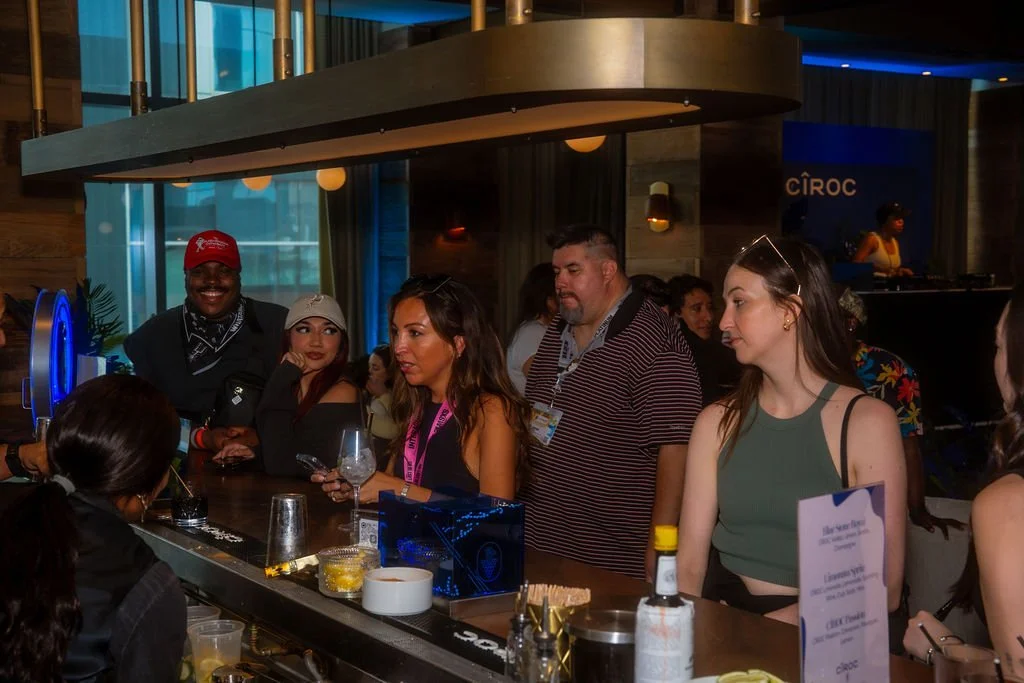
A beverage brand sets up a pop-up tasting bar at the main festival entrance—not inside the gated sponsor zone.
It becomes the unofficial “first stop,” capturing guests when their energy is highest.
Or a lifestyle brand builds a photo moment on a busy stadium walkway.
The moment becomes a share-worthy surprise — not a forced sponsor deliverable.
Integrated Local Partnerships = Higher Resonance
Official partnerships often collide with conflicting sponsor categories.
Adjacent activations don’t.
You can:
Partner with a local restaurant
Tap a neighborhood artist
Introduce your own programming with speakers or entertainers
Build a multi-brand partnership without category restrictions
This widens the creative palette significantly.
(If you want modular activation concepts designed for high-energy pathways, pre-game zones, and cultural corridors, The Event Experience Idea Bank outlines 50+ buildable ideas specifically for environments like Super Bowl and FIFA.)
Community-Led vs. Brand-Led Activations: The Advantage No Sponsor Can Buy
Official sponsors often design for global visibility.
Adjacent activators can design for local relevance — and that is where cultural traction is strongest.
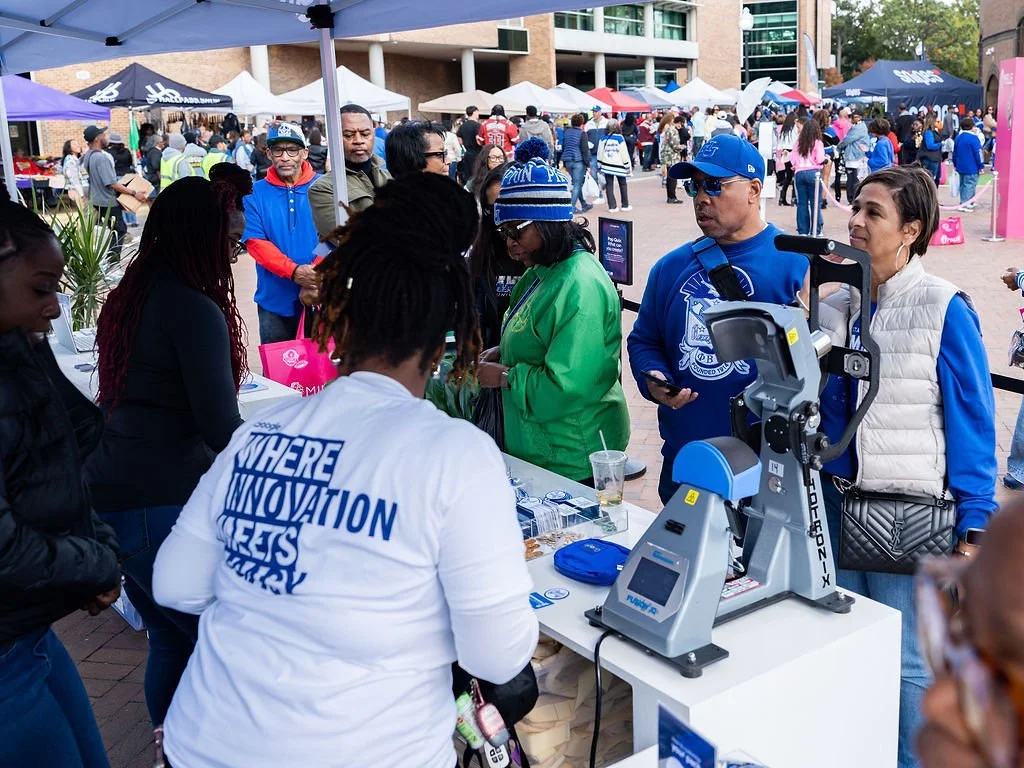
When CSA builds community-led activations, we focus on embedding the brand into the environment, not layering it on top of it.
Why Community-Led Outperforms Sponsor-Led:
1. Cultural Resonance
Showing up in ways that respect local rituals, traditions, and aesthetics doesn’t feel like advertising — it feels like participation.
2. Authentic Storytelling
Local collaborators bring nuance and texture that national creative directors can’t replicate.
3. Organic Amplification
Moments rooted in neighborhood identity spread naturally. People share them because they feel personal, not promotional.
Examples of Community-Led Activations:
Neighborhood Pop-Up Cafe
A global coffee brand opens a temporary café in a historic district, featuring pastries from local bakers and installations by local artists.
Locals feel honored. Visitors feel like insiders.
Everyone feels connected.
Creator-Led Beauty Experiences
A beauty brand partners with local stylists and creators to host pop-up workshops inspired by the city’s culture.
This turns the activation from a promotion into a cultural exchange.
These moments don’t just create impressions—they create belonging.
The Secret to Winning Without Sponsorship: Show Up Where the Story Lives
Success at global events isn’t about the badge.
It’s about the moment.
When you can’t buy your way onto the official stage, you build your own stage where the culture already is.
Adjacent experiences win because:
They feel human, not corporate
They encourage discovery
They meet people in real environments
They avoid the clutter of sponsor-heavy spaces
They integrate local voices
They are nimble, innovative, and authentic
Super Bowl and FIFA 2026 will be crowded.
But the brands that think outside the perimeter—literally and creatively—will dominate the cultural conversation.
Final Takeaway: Sponsorship Doesn’t Equal Impact — Strategic Presence Does
You don’t need to pay for the official badge to show up with excellence.
You just need the right mix of:
Creativity
Cultural understanding
Operational discipline
Community integration
Behavioral insight
Environmental strategy
Global moments reward the brands that show up boldly, thoughtfully, and in the right places — not just the official ones.
If you want to architect experiences that thrive outside official sponsor zones — without compromising quality, compliance, or resonance — CSA designs activations rooted in cultural awareness and behavioral psychology.
And if you’re mapping concepts for Super Bowl, FIFA 2026, or another major cultural moment, The Event Experience Idea Bank is the perfect next step.
It’s packed with adjacent activation formats, community-led ideas, and UGC-ready moments built precisely for environments where creativity needs to outperform the sponsor playbook.
When you’re ready to bring it off the page and into the world, CSA is the experiential partner that knows how to win without the badge.